
Ferruccio Lamborghini and Cento: three days among tractors, history and home
Before the bull on the bonnet, there was a farmer's son from the plain around Cento who built tractors. VISSUTO's three-day experience follows that story where it began.
VISSUTO Journal · 6 min read
Where the story starts
Most people meet the Lamborghini name through a car. The story itself begins somewhere quieter: on a family farm in the flat countryside of Emilia. According to the Ferruccio Lamborghini Museum, Ferruccio was born on 28 April 1916 in Renazzo, in the province of Ferrara, the eldest of five sons in a farming family.
His father hoped he would take over the land. Ferruccio was drawn to engines instead. He trained at a local technical school, learned iron working and welding in a blacksmith's workshop, and at eighteen opened his own workshop in Renazzo with a lifelong friend.
Tractors before cars
After the Second World War, which he spent largely as a mechanic on the island of Rhodes, Ferruccio returned home in 1946 to an area where agriculture was struggling. His answer was a tractor: simple, strong and affordable for the small farms of the plain.
The museum records that his first tractor, the Carioca, was built from surplus wartime equipment and presented to the public on 3 February 1948 — the feast of San Biagio, patron saint of Cento. In 1951 the first real production company, Trattori Lamborghini, was born, and by the 1960s the tractor business had grown to nearly 400 employees.
Only later, in 1963, did Ferruccio found Lamborghini Automobili in Sant'Agata Bolognese. The cars made the name famous around the world. The tractors explain where the determination came from.
The experience Pedro organizes
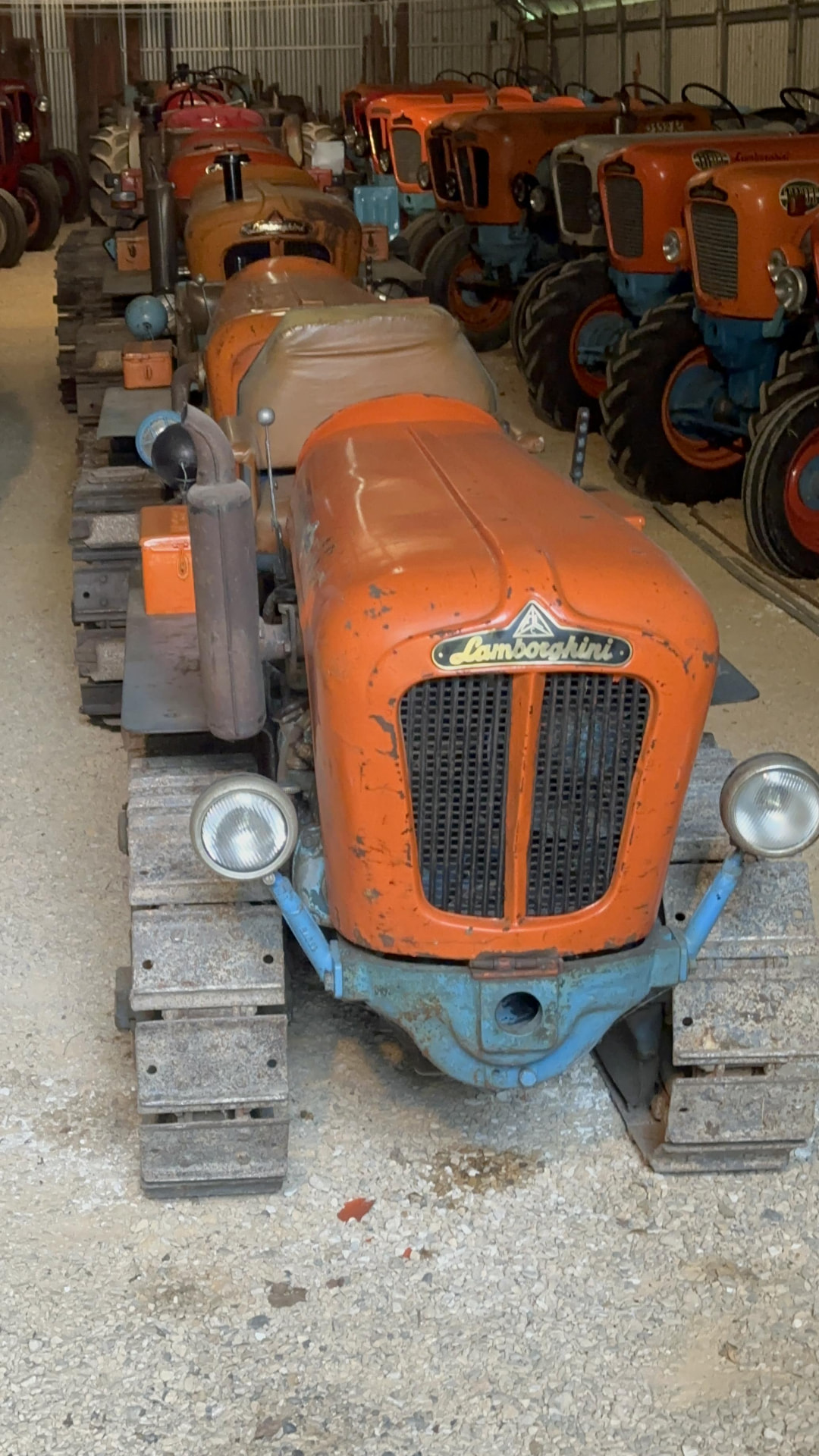
VISSUTO's Lamborghini experience runs over approximately three days around Cento. It is built on three things: learning the history of Ferruccio Lamborghini, visiting Ferruccio's house, and seeing historic Lamborghini tractors in person — worn orange paint, working machines, the beginning of everything.
The pace is unhurried and the story is told as a story, not as a tour. Exact dates, access to specific places and the shape of each day are confirmed when the experience is planned, because they depend on the season, on the people travelling and on the places themselves.
Who it suits
It suits guests who already know the cars and are curious about the man; families who want to share a story across generations; people who think like engineers; and anyone who would rather spend a few days in the farmland of Emilia than in a showroom.
Outside context: the Ferruccio Lamborghini Museum
The Ferruccio Lamborghini Museum, founded by his son Tonino Lamborghini and inaugurated in 2014, is located in Funo di Argelato, near Bologna — not in Cento. It tells Ferruccio's life through his machines, from the first Carioca tractor to his personal cars, along with a reconstruction of his first office. It is mentioned here as background; it is not part of the experience as described. If you would like to include it, raise it with Pedro on Pebble.
Questions guests ask
- How long is the experience?
- Approximately three days. The exact shape depends on your dates and on access, which is confirmed when planning.
- Is there a fixed itinerary?
- No. The experience is planned around the people travelling. Access to specific places is confirmed during planning, never assumed.
- Where is Cento?
- Cento is a town in the Emilian plain, in the province of Ferrara, between Bologna and Ferrara. Travel arrangements are discussed when planning.
- Can dietary needs be accommodated?
- Dietary needs and preferences are considered from the first conversation.
- How do I start?
- Use the Pebble chat at the bottom of this page to tell Pedro who is travelling and when.
To talk about this experience, use the Pebble chat at the bottom of the page.
Sources
Background facts come from these independent sources. They describe places and history — not VISSUTO's services.